
Digging with Discipline: Why Good Enough Doesn’t Work So Well when in the Trenches
Dig it right the first time.
4/11/2026
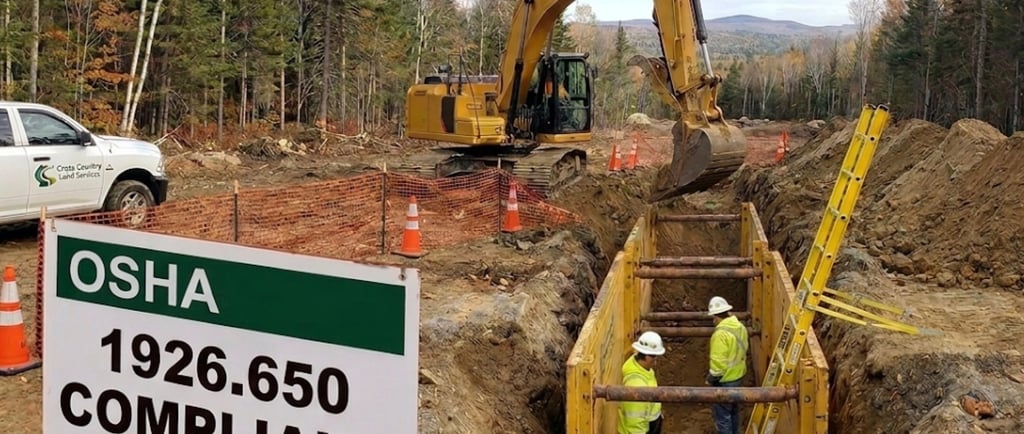
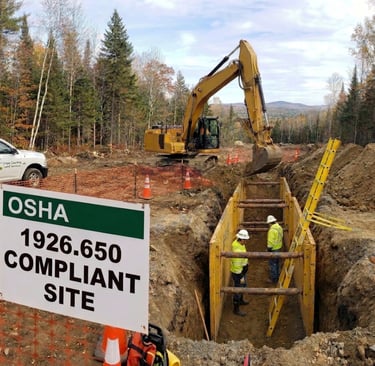
In the world of site execution, an excavator is the ultimate force multiplier. It’s the muscle of the job site, capable of moving tons of earth in a single shift. But that same power creates a high-stakes environment where a single oversight can turn a productive afternoon into a life-or-death catastrophe. For those of us managing these sites, safety isn't about avoiding an OSHA violation citation - it’s a strategic pillar of environmental and operational stewardship.
The Silent Weight of a Cave-In
A trench collapse doesn't give you a warning. It’s a silent, instantaneous event. To put it in perspective, soil typically weighs about 3,000 lbs per cubic yard. That is roughly the weight of a mid-sized sedan hitting you all at once. When a wall fails, the pressure alone makes it impossible to breathe. In my world, we don't just watch the trench walls. We engineer the environment so that a cave-in is either physically impossible or, at the very least, survivable.
The Defensive Playbook: Shielding and Shoring
Choosing how to protect your team depends on the soil and the space you have. If we have the room, we’ll slope the walls back at an angle. If space is tight, we use shoring to apply outward pressure and keep the earth in place.
Then there are trench boxes (shielding). These are your survival zones. A common mistake I see in the field is a box that sits flush with the ground. To be truly effective, that box needs to extend at least 18 inches above the surface. Why? Because if the top edge of the trench fails, you don’t want that spillover pouring into the work area like a funnel
The Competent Person is the Linchpin
Before the bucket ever touches the dirt, you need a Competent Person on the ground. This isn't just a title - it’s a functional role. This is the individual who classifies the soil (Type A, B, or C) and re-evaluates the site after every rain event or heavy vibration. Most importantly, they have the absolute authority to halt work the second conditions shift.
The Logistics of the Escape
A protective system is only half the battle; your crew needs a way out that doesn't involve a scramble.
The 4-Foot Rule: Once you hit four feet deep, you need a ladder or a ramp.
The 25-Foot Rule: A worker should never have to travel more than 25 feet laterally to reach that exit.
The Ladder Extension: This is a big one. Your ladders should extend 3 feet above the surface. This gives a worker a solid handhold to transition from the ladder to flat ground without putting weight on a potentially unstable trench edge.
Managing the Machine and the Spoil
It’s easy to focus only on what’s happening inside the hole, but what’s happening on the edge is just as critical. We follow the 2-Foot Rule: keep the spoil pile and all heavy machinery at least two feet back from the edge. This prevents surcharge loads from adding unnecessary weight to the trench walls.
The Bottom Line
Efficient site execution is never at odds with safety. In fact, a site that respects the physics of the trench is a site that avoids the costly delays, legal liabilities, and tragedies of a collapse. When you combine individual certifications in erosion control with the rigorous standards of an OSHA construction mindset, you aren't just digging a hole - you’re managing a high-performance environment.
Related Articles:
The Hidden Perimeter: Why Biosecurity is the New Frontier of Site Development
Services
EPA and Maine Department of Environmental Protection certified expert site development including land clearing, forestry mulching, erosion and sediment control, excavation, tree removal, and access road construction for your commercial, industrial, residential, and agricultural projects.
services.info@crosscountrylandservices.com
(207) 320-3390


UEI: W7ZHSQWKC8N6
CAGE: 1AEB9