Maine Wildfire Mitigation: Protecting Your Property and Forests
How to best protect your property from wildfire damage.
WILDFIRE MITIGATION
4/6/2026
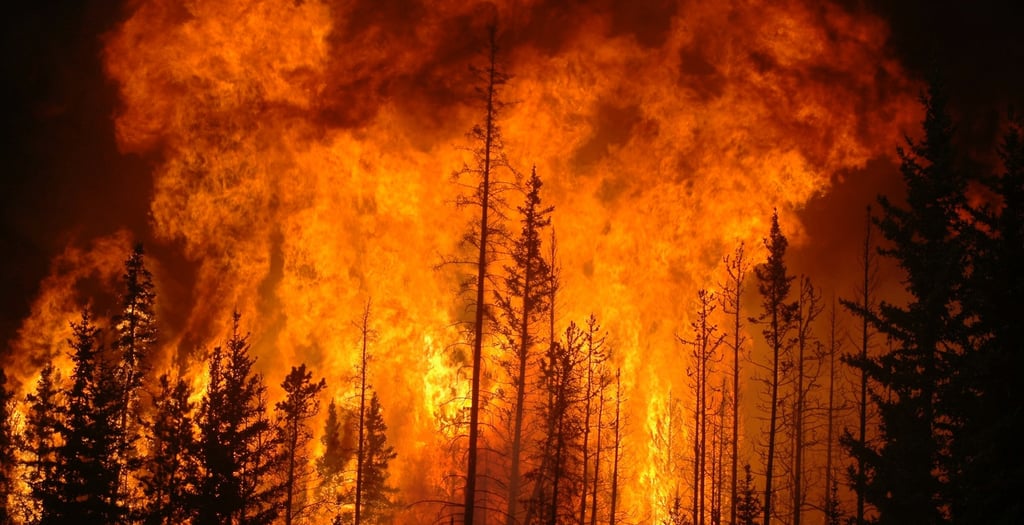
With Maine’s shifting climate and dense canopy, wildfire prevention is no longer just a "West Coast" concern. Historically, Maine sees an average of 650 wildfires burning 550 acres annually. However, the risk is escalating. Due to extended droughts across most of the state, the 2025 fire season produced 852 wildfires. While these were contained to 514 acres, the impact on infrastructure was severe—damaging or destroying 22 residences and 47 other structures.
As a Maine landowner, proactive fuel management is the most effective way to protect your investment and the health of our local ecosystems. Building on our baseline strategy, effective mitigation for larger holdings—such as commercial woodlots or land trust preserves—requires a shift from individual-tree care to landscape-scale fuel-continuity management.
Advanced Residential: The "Hardened" Ignition Zone
In Maine’s Wildland-Urban Interface (WUI), the goal is to make a home defensible even if professional crews cannot reach it immediately.
Structure Hardening: Wildfire destruction is often caused by embers, not the main fire front. Replace standard attic and crawlspace vents with 1/8-inch metal mesh to prevent wind-blown embers from entering the structure. Box in open eaves and soffits with non-combustible materials (fiber cement or metal) to eliminate heat pockets.
Vertical & Horizontal Fuel Separation: While we limb trees to 8 feet to break the vertical ladder, horizontal spacing is equally critical. In the "Intermediate Zone" (5–30 feet from the home), ensure tree canopies are spaced at least 18 feet apart. Remove coniferous "ladder fuels" such as junipers or small spruces that sit directly beneath larger deciduous trees.
The 5-Foot Non-Combustible Zone: Clear all flammable mulch, dry leaves, and woodpiles from the immediate 5-foot perimeter of your home, replacing them with stone or gravel.
Emergency Resource Prep: Ensure any static water supply (pools or ponds) has clear truck access within 10 feet of the edge. Use 4-inch reflective numbering at the street and any driveway forks; if a fire warden can’t find you in the smoke, they can’t protect you.
Commercial & Land Trust Managed Forest: Landscape Resilience
For land trusts and commercial managers, the focus is on biosecurity, access, and fuel-load reduction to protect timber value and recreational assets.
Strategic Mastication (Forestry Mulching): Instead of clear-cutting, use forestry mulchers to create 50-foot-wide "shaded fuel breaks" along property boundaries and existing trails. This keeps the cooling canopy intact (preventing the floor from drying out) while removing the understory "kindling."
Invasive & Slash Management: Species like Japanese Barberry create dense, flammable thickets. Masticating these—and post-harvest logging slash—into a compacted mulch layer accelerates decomposition and removes "high-energy" fuels. This eliminates the multi-year fire risk posed by dry "landing" piles.
Access & Infrastructure: Every dead-end logging road or trailhead should feature a T-turn or cul-de-sac with a 60-foot diameter to accommodate Type 3 forest fire engines. Ensure all stream crossings and culverts are rated for heavy equipment (minimum 25–30 tons) and clearly marked.
"Clean-In, Clean-Out" (CICO) Protocols: When moving mastication equipment between units or trusts, rigorous cleaning is mandatory to prevent the spread of invasive seeds or pathogens like Oak Wilt, ensuring mitigation doesn't become an ecological hazard.
Maine Mitigation Summary Checklist
Pruning: Limb trees to 8 ft minimum within 100 ft of homes, while focusing on primary forest boundaries for larger woodlots.
Fuel Treatment: Clear leaves from residential gutters and utilize forestry mulching to masticate woodlot floor debris into moisture-retaining mulch.
Access Maintenance: Maintain a 12'x14' clearance for residential fire rig access and keep logging roads clear as permanent forest firebreaks.
Debris Management: Move residential woodpiles 30 ft from structures and scatter or masticate small brush piles in the deeper forest.
Infrastructure (Large Lots): Ensure all stream crossings are rated for 25+ tons and 60-ft turnarounds are established at all gated entry points.
Professional Insight
For land trusts, wildfire mitigation often doubles as habitat restoration. By thinning suppressed understory through mastication, you increase light penetration for native ground cover while simultaneously removing the fuels that lead to catastrophic stand-replacement fires.
Given the 2025 season's data, the "wait and see" approach is a liability. Whether it's a residential lot or 50,000 acres of managed forest, the time to break the fuel ladder is before the next drought cycle hits.
Services
EPA and Maine Department of Environmental Protection certified expert site development including land clearing, forestry mulching, erosion and sediment control, excavation, tree removal, and access road construction for your commercial, industrial, residential, and agricultural projects.
services.info@crosscountrylandservices.com
(207) 320-3390


UEI: W7ZHSQWKC8N6
CAGE: 1AEB9