Protecting Maine Land Trust Vitality - The Strategic Role of Forestry Mulching
Maintain the vitality of Maine’s protected lands with low-impact forestry mulching. We help land trusts manage suffocating undergrowth, enrich soil health through nutrient cycling, and secure grant funding by meeting strict "clean-in, clean-out" and fire-safety standards.
5/7/20262 min read
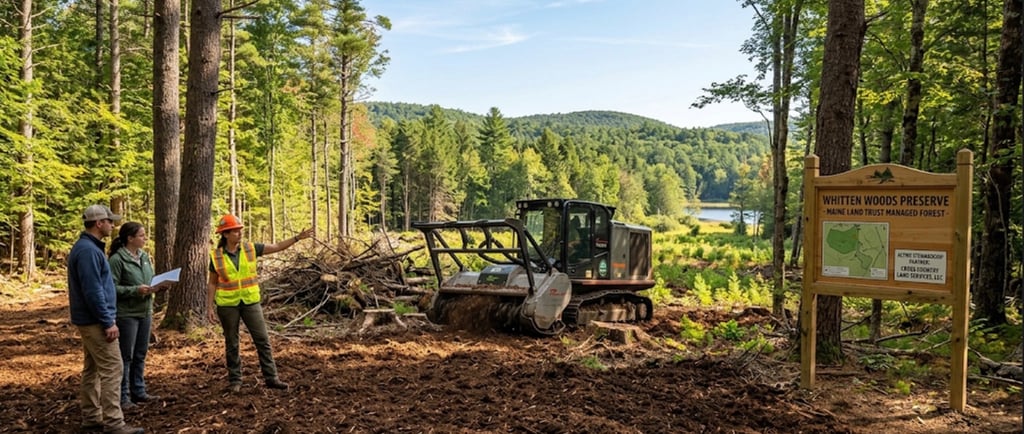
Land trusts carry a heavy responsibility: the permanent protection of ecological integrity. When a parcel of land is preserved, the work doesn't end - it begins.
For many trusts and the licensed foresters who manage them, the primary challenge is managing dense biological walls - the invasive species, suffocating undergrowth, and leftovers of historic timber harvests that can choke out native biodiversity.
To maintain a truly healthy forest, stewardship must be active. Forestry Mulching has emerged as a strategic resource for balancing the goals of conservation with the mechanical realities of forest health in Maine’s unique landscape.
A Surgeon’s Tool for the Forester
A forester’s goal is to manage the stand - ensuring the right trees have the space, light, and nutrients to thrive. Forestry mulching acts as a surgical tool in their management toolbox:
• Selective Thinning: Unlike broad clearing, mulching allows a forester to mark specific low-value stems or invasive thickets for removal while leaving high-value crop trees completely undisturbed.
• Enhanced Monitoring: A mulched floor allows foresters to easily traverse the acreage to conduct timber cruises, identify pest outbreaks, and mark future harvest boundaries with precision.
Complementing Logging: Managing the Debris
Many Maine land trusts utilize sustainable logging as a management tool, but the resulting slash - the tops, limbs, stumps, and debris left behind can hinder forest regeneration for decades.
• Accelerated Decomposition: Grinding limbs and stumps into smaller chips allows fungi and bacteria to return nutrients to the soil much faster than a standard brush pile or standing stump would.
• Seedbed Preparation: By grinding stumps flush and clearing tangled branches, mulching creates a clean, receptive bed where the next generation of native seedlings selected by the forester can take root without obstruction.
Drought Resilience and Fire Mitigation
With the extended drought conditions we are currently experiencing in Maine, a forester's primary concern shifts to risk mitigation.
• Fuel Load Reduction: Mulching brings high-profile fuel down to the ground. Processed mulch is much harder to ignite than loose, airy piles of dry wood, effectively creating a fire-wise buffer for the trust.
• Moisture Conservation: During a drought, an exposed forest floor loses moisture rapidly. The mulch mat created by this process acts as an insulator, trapping soil moisture and protecting the root systems of standing timber from extreme heat stress.
Community, Accessibility, and Funding
Land Trusts rely on public support and external funding to survive. Forestry mulching provides a unique advantage in securing both:
• Public Perception & Aesthetics: Traditional clearing can look like a disaster zone to the untrained eye. Mulching creates an immediate park-like finish that is inviting for donors and the public. It opens up views and improves trail aesthetics instantly.
• Grant Eligibility: Many federal and state programs such as NRCS initiatives or Community Wildfire Defense Grants prioritize low-impact and fuels reduction methods. Forestry mulching aligns perfectly with these criteria, making the trust's projects more competitive for funding.
Soil Enrichment and Erosion Control
Unlike traditional cut and haul methods, forestry mulching leaves the organic material exactly where it belongs.
• Erosion Prevention: For trusts managing sloped terrain, this organic carpet provides immediate ground cover, preventing topsoil runoff during heavy Maine rains.
• Low Impact: Forestry mulchers exert significantly less ground pressure than traditional heavy equipment. There is no need for burning brush piles or ripping out stumps, which keeps the forest floor’s structure and mycelial networks intact.
A Strategic Partner for Stewardship
Maintaining a land trust isn't just about preventing development; it’s about active environmental stewardship. By providing foresters with the tools to clear slash, manage stumps, and mitigate fire risks, we ensure that the forests we protect today remain healthy, resilient, and accessible for generations to come.
Services
EPA and Maine Department of Environmental Protection certified expert site development including land clearing, excavation, forestry mulching, tree removal, structure demolition and removal, and access road construction for your commercial, industrial, residential, and agricultural projects.
services.info@crosscountrylandservices.com
(207) 320-3390


UEI: W7ZHSQWKC8N6
CAGE: 1AEB9