The Compliance Factor: Why Professional Guidance is Non-Negotiable
Shoreline stabilization and erosion & sediment control
EROSION AND SEDIMENT CONTROL
4/26/20262 min read
When it's time to move beyond simple maintenance and into active shoreline stabilization, the stakes—and the regulations—increase significantly. In Maine, the "Shoreland Zoning Act" governs almost every activity within 250 feet of a water body.
While it’s tempting to handle an eroding bank as a DIY weekend project, unpermitted or improperly executed work can lead to heavy fines and, more importantly, long-term damage to the aquatic ecosystem.
The Value of Certified Expertise
Working with a professional who holds specific environmental certifications ensures that your project doesn't just look good, but stays compliant.
• Regulatory Navigation: A competent professional understands the "Permit by Rule" process and knows exactly what the DEP and your local planning board require before a single stone is moved.
• Workforce Standards: Ensure your contractor provides a team where every crew member is trained in erosion and sediment control. This guarantees that "Clean-In, Clean-Out" biosecurity protocols are followed, preventing the introduction of invasive species to your pond.
• Risk Mitigation: A professional approach shifts the liability away from the homeowner, ensuring that site execution meets the highest standards of environmental stewardship.
Combining Strength and Nature: Stabilization Techniques
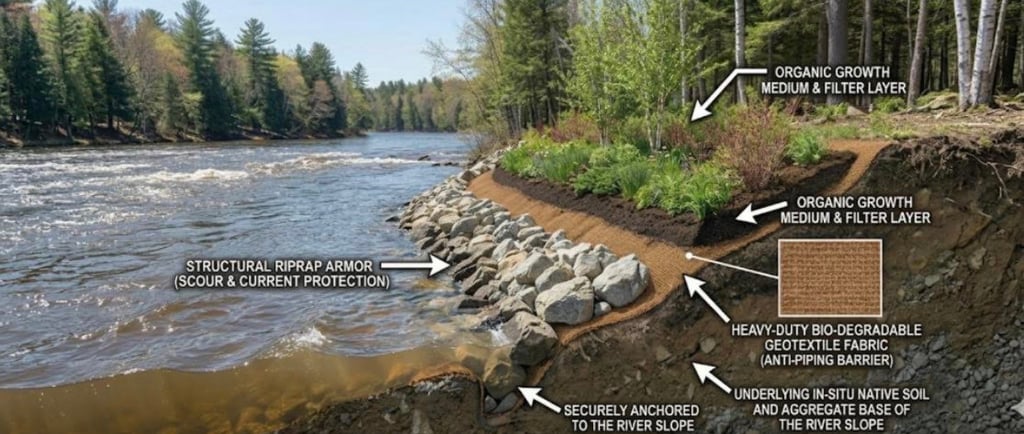
The most resilient shorelines use a "hybrid" approach, combining the structural strength of stone with the natural filtering power of plants.
Rip-Rap: The Structural Anchor
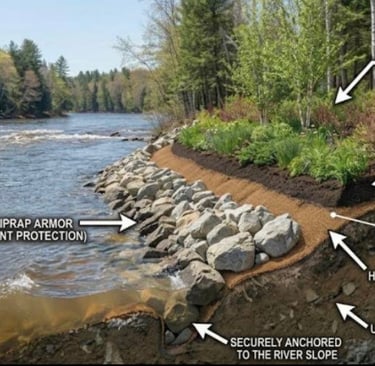
For shorelines facing heavy wave action or significant undercutting, rip-rap is often the gold standard. This involves the strategic placement of large, angular stones along the bank.
• How it works: Unlike a flat vertical wall, rip-rap has "voids" between the stones that absorb and dissipate the energy of the waves rather than reflecting it back, which prevents further erosion at the base.
• Compliance Note: Rip-rap usually requires a filter fabric or a "broken stone" base layer underneath to prevent the soil from washing out through the rocks.
Vegetated Stabilization: The Living Filter
Vegetation is your shoreline’s first line of defense. For many camps, "soft" engineering is more effective and visually appealing than stone alone.
• Native Planting: Using native shrubs like Dogwood or Winterberry provides a deep, "web-like" root structure that binds the soil together.
• Live Staking: In some cases, dormant branches can be inserted directly into a bank. These "stakes" will eventually grow into a root system that reinforces the soil naturally.
• The Hybrid Method: Often, we plant vegetation within or directly above the rip-rap. This provides a natural look while the roots further anchor the stones, creating a permanent, self-healing barrier.
Ready to secure your waterfront for the season?
Don't wait until the next heavy rain to address your shoreline. Ensure your project is handled by a partner committed to compliant site execution and the long-term health of our Maine waterways
Services
EPA and Maine Department of Environmental Protection certified expert site development including land clearing, excavation, forestry mulching, tree removal, structure demolition and removal, and access road construction for your commercial, industrial, residential, and agricultural projects.
services.info@crosscountrylandservices.com
(207) 320-3390


UEI: W7ZHSQWKC8N6
CAGE: 1AEB9