Shifting Ground: Why Erosion Control Has Become Maine’s Most Critical Infrastructure Challenge
Discover why erosion and sediment control is critical for Maine properties. Learn how climate shifts impact soil stability and how certified Best Management Practices (BMPs) protect your investment and natural resources.
5/20/20263 min read
For generations, managing land in Maine followed a predictable rhythm. Mud season arrived in the spring, the ground dried out by June, and standard construction or landscaping practices were usually enough to keep soil where it belonged.
But over the last few years, the ground beneath our feet has changed.
Between a historic multi-year drought baking the landscape and increasingly frequent, high-volume rain events like intense Nor’easters and slow-moving summer thunderstorms, Maine property owners and developers are facing an unprecedented erosion crisis. When prolonged dry spells are suddenly interrupted by several inches of rainfall in a single afternoon, vulnerable topsoil doesn’t absorb the water—it shears off.
Whether you are a homeowner watching your waterfront property slowly reclaim its status as a lake, a municipal leader monitoring undermined culverts, or a developer keeping a commercial project on schedule, understanding the mechanics and importance of erosion and sediment control (ESC) is no longer optional. It is the foundation of protecting our land, our investments, and our natural resources.
The Core Challenge: Erosion vs. Sedimentation
While often grouped together as a single phrase, erosion and sedimentation are two distinct phases of a destructive cycle. To solve the problem, you have to address both.
Erosion is the displacement. It happens when kinetic energy—usually from raindrops or rushing surface water—loosens soil particles and detaches them from the land. This creates the visible washouts, ruts, and unstable slopes that threaten structures and driveways.
Sedimentation is the deposition. Once the soil is mobilized, water carries it downhill until the flow slows. The soil settles, dropping mud and debris into roads, drainage ditches, wetlands, and water bodies.
When a site lacks proper controls, the damage is twofold: you lose structural integrity at the source of the erosion, and you create severe environmental liabilities wherever the sediment lands.
Why Proper Control is Critical in Maine
The stakes of ignoring erosion control extend far beyond aesthetics. In Maine, failing to properly stabilize a site carries heavy structural, financial, and environmental consequences.
Structural Integrity and Property Loss
Soil is the literal foundation of our infrastructure. When runoff cuts unmanaged pathways through a property, it quickly undermines driveways, threatens the stability of steep backyards, and compromises building foundations. For a homeowner, a single severe storm can wash away tens of thousands of dollars in property value and usable land. For a municipality, an undersized or unprotected culvert can cause a road washout that cuts off entire communities.
Environmental Degradation
Maine is defined by its pristine natural resources—our coldwater fisheries, great ponds, and fragile shorelines. When muddy runoff escapes a site and enters a water body, it carries phosphorus and other nutrients that trigger toxic algae blooms. Furthermore, sediment smothers trout and salmon spawning habitats, choking out the gravel beds necessary for aquatic life.
Tightening Regulatory Frameworks and Liability
Because our water quality is so vital, the state maintains some of the strictest environmental laws in the country. The Maine Department of Environmental Protection (DEP) continuously updates its rules to combat shifting climate patterns.
Moving Beyond "Just Pushing Dirt"
The days of throwing up a standard plastic silt fence and hoping for the best are over. Modern erosion control requires a deep understanding of Maine’s unique, often rocky and clay-heavy terrain, alongside an engineered approach to hydrology—how water actually moves across a specific landscape.
Effective site execution relies on two distinct layers of defense:
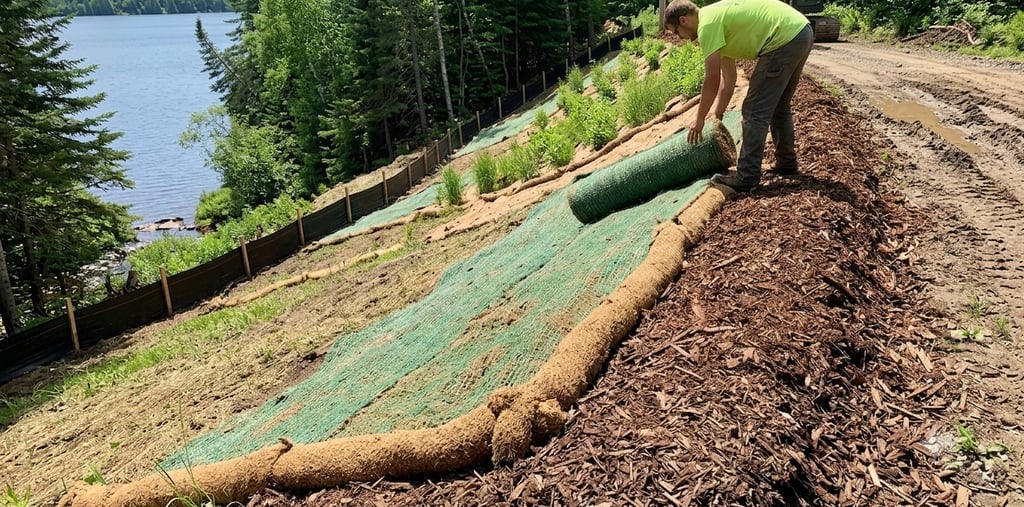
The first layer is Erosion Control (Prevention), which stops the soil from moving in the first place by armoring the ground. Common examples of this approach include hydroseeding, erosion-control blankets, bark-mulch berms, and the preservation of native vegetative buffers.
The second layer is Sediment Control (Containment), which catches and filters any soil that breaks free before it can leave the site boundary. This is typically achieved using methods like sedimentation basins, stabilized construction exits, and properly anchored perimeter barriers.
Furthermore, the state is increasingly leaning into nature-based designs. Programs like the DEP’s O.U.R. S.H.O.R.E. initiative emphasize living shorelines and biodegradable materials that blend seamlessly into the natural landscape while providing long-term structural resilience.
The Value of Certified Expertise
Erosion control isn't a side task to tackle with a spare tractor; it is a specialized discipline. A properly executed plan requires trained personnel who can read a slope, calculate runoff volumes, select the exact BMP for the soil type, and adapt to changing weather conditions in real time.
When crews are fully certified in DEP environmental practices, a project shifts from a high-risk gamble to a compliant, secure operation. Protecting Maine’s landscape means engineering peace of mind—ensuring that when the next heavy forecast hits, the land stays firmly where it belongs.
Related Articles:
Digging with discipline, why good enough doesn't work so well when in the trenches
Services
EPA and Maine Department of Environmental Protection certified expert site development including land clearing, forestry mulching, erosion and sediment control, excavation, tree removal, and access road construction for your commercial, industrial, residential, and agricultural projects.
services.info@crosscountrylandservices.com
(207) 320-3390


UEI: W7ZHSQWKC8N6
CAGE: 1AEB9